WHEN THE WATER STARTS TO RISE
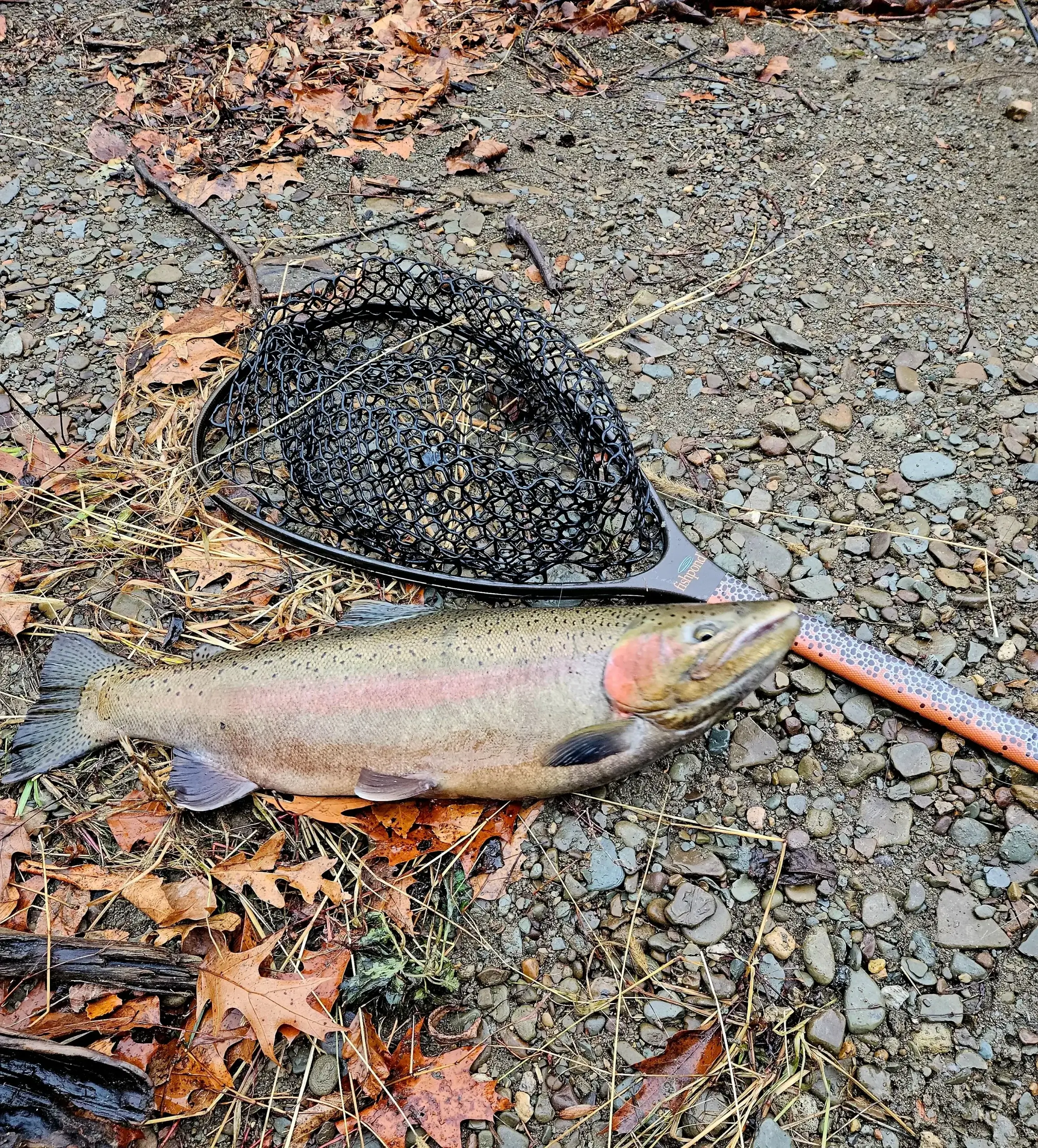
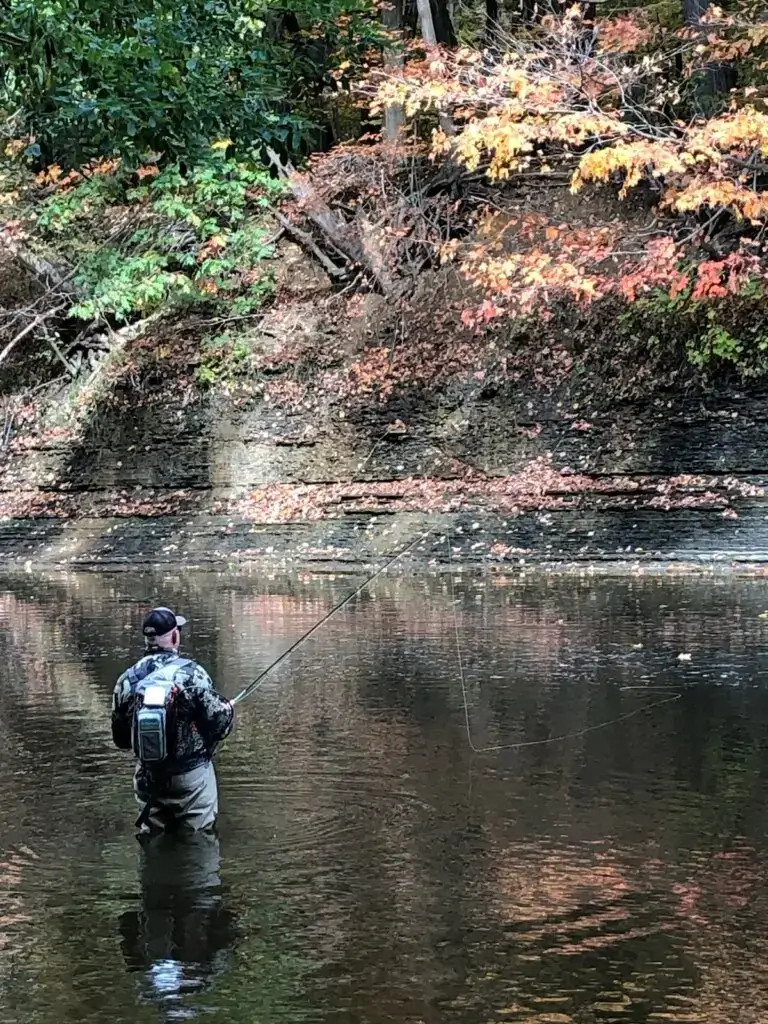
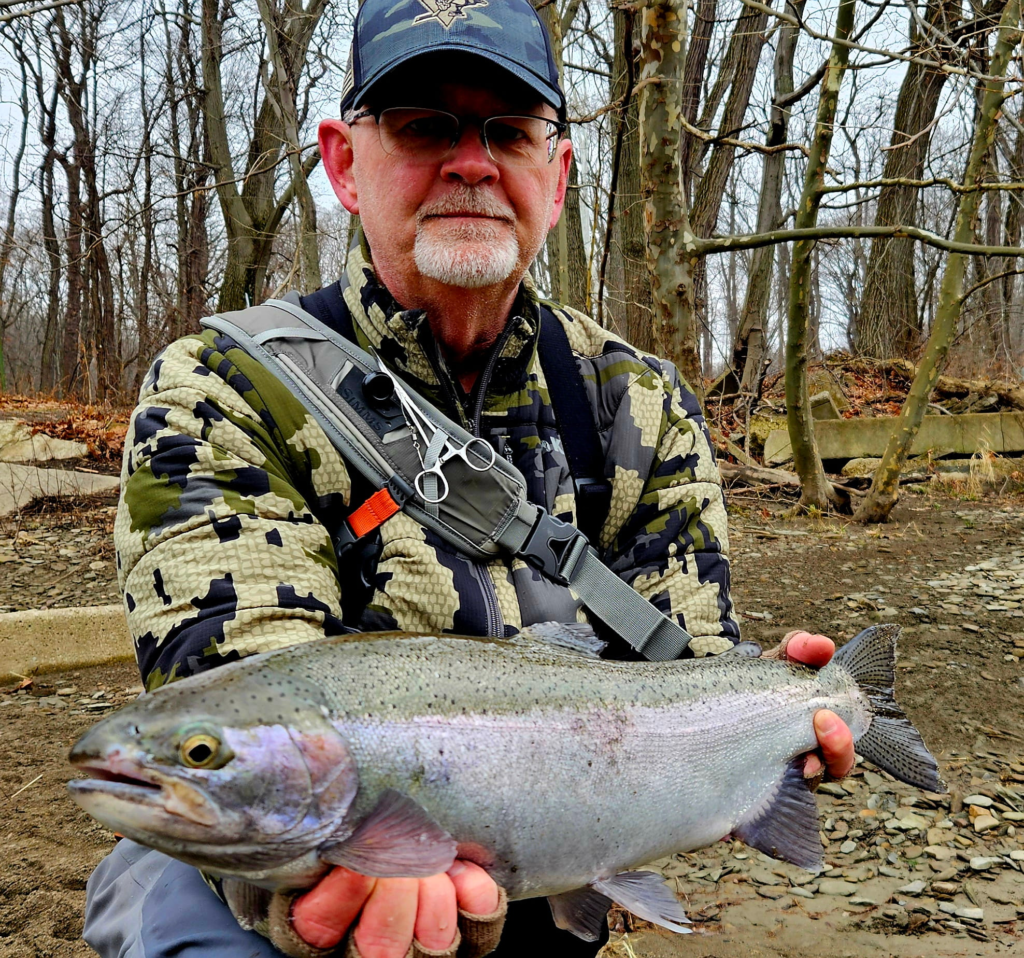
By late October, the last echoes of traditional trout season have faded, and our attention turns north toward Erie steelhead fishing and the lake-run rainbows that push into Lake Erie tributaries. When the leaves begin to burn orange and red, and a steady fall rain lifts the creeks just enough, the steelhead begin their push upstream. That first rise in the water feels like an invitation. Fly anglers, spin casters, catch-and-release purists, and freezer-fillers all find their way to the creeks for the same reason: the chance to meet a lake rainbow that can stretch 24 to 30 inches, with a few pushing past 32. Some days you stand shoulder to shoulder with strangers. Some days you find a quiet bend all to yourself. Either way, when a big trout grabs your fly and tears upstream with you running after it, the season has officially begun.
FINDING FREEDOM IN THE RIGHT TIMING
The crowds are part of the Erie rhythm, but we have always tried to fish around them. For years, that meant burning vacation days and slipping away during the week, hoping the creeks would be quieter and the fish would still be moving. This fall feels different. With both of us retired, we can watch the weather, wait for the right water, and head north when the opportunity is best instead of when the calendar allows.
READING ERIE’S CREEKS AND STEELHEAD RUNS
Part of what makes Erie special is the way the whole season depends on timing. You can study the forecast all week, watch the gauges, and still arrive to find the creek a little too low, a little too high, or just beginning to wake up. For anyone planning a fall steelhead fishing trip, watching stream flow and weather matters as much as choosing the right fly. That uncertainty is part of the story. It makes every trip feel earned before the first cast ever hits the water.
The first time I fished for Erie steelhead, I was struck by how nomadic the fish can be. One minute you are standing over a large pod, watching silver shapes slide in and out of the current, and the next minute they are gone, moving upstream as if someone opened a gate. If luck and timing are on your side, another pod may follow close behind. Other days, you do more walking than casting, studying the seams, the shadows, and the gravel until the water finally gives something away. That is where a good pair of polarized glasses for steelhead fishing helps. The migration depends on several factors, but water flow always seems to be the one that decides whether the day will leave you smiling or searching.
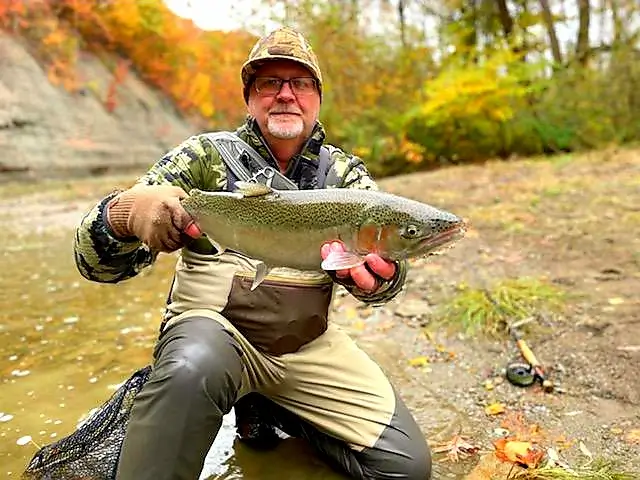
A FAVORITE STEELHEAD FLY WHEN THE CREEK GOES QUIET
There are mornings when the whole creek seems to hold its breath. Leaves collect in the seams, the water carries that cold green tint, and every cast feels like it might be the one that wakes up the run. When all else fails, we usually reach for one of our favorite steelhead flies, a variation of Jeff Blood’s White Death. There is something about that fly that steelhead find hard to ignore. If you open the fly box and realize you are tying on your last one, it means the day has gone one of two ways: either the fish have been generous, or the creek bottom has been eating better than you have.
WINTER STEELHEAD FISHING AND CHRISTMAS MORNING
For the last couple of years, Christmas morning has given us a small window to be on the water. There is something special about those quiet hours before noon, when only a few others are out and the day still feels tucked away from the holiday rush. By midday, we are usually headed home for the rest of the celebrations. Winter steelhead fishing, though, demands respect. Rising and falling water can turn dangerous quickly, and when ice locks along the edges, we stay away. The risk is not worth it. On bitter days when the creek is open, the right gear matters: boots sized up for extra socks, layers on layers, and a steady habit of checking rod guides for ice. Nothing reminds you it is winter faster than a frozen eyelet when casting.
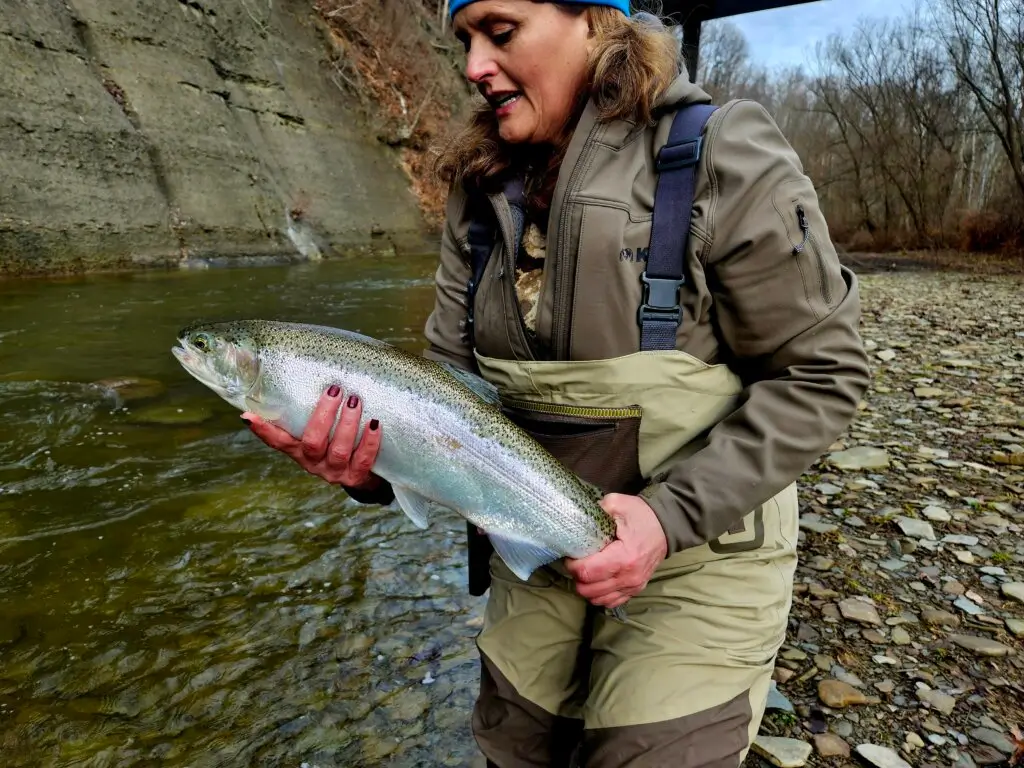
WHY ERIE KEEPS CALLING
That is what keeps drawing me back to Erie each fall and winter. It is not only the size of the fish, though that is certainly part of the pull. It is the waiting for the right rain, the search for moving pods, the sting of cold air on the walk in, and that sudden electricity when a fish turns downstream and the line cuts through the current. By the time the season arrives, the invitation has already been sent; by the time a steelhead takes, the story is already underway. If you fish Erie’s tributaries, I would love to hear what conditions, flies, or winter rituals keep bringing you back.